What Size Dumpster Do I Need in Joplin, MO?
Ten, 15, 20 or 30 yard? The right size is about weight as much as volume - especially on Joplin's rocky ground. Here's how to choose without over- or under-paying.
In this guide
- Start with the material, not the box
- The 10 yard: heavy material only
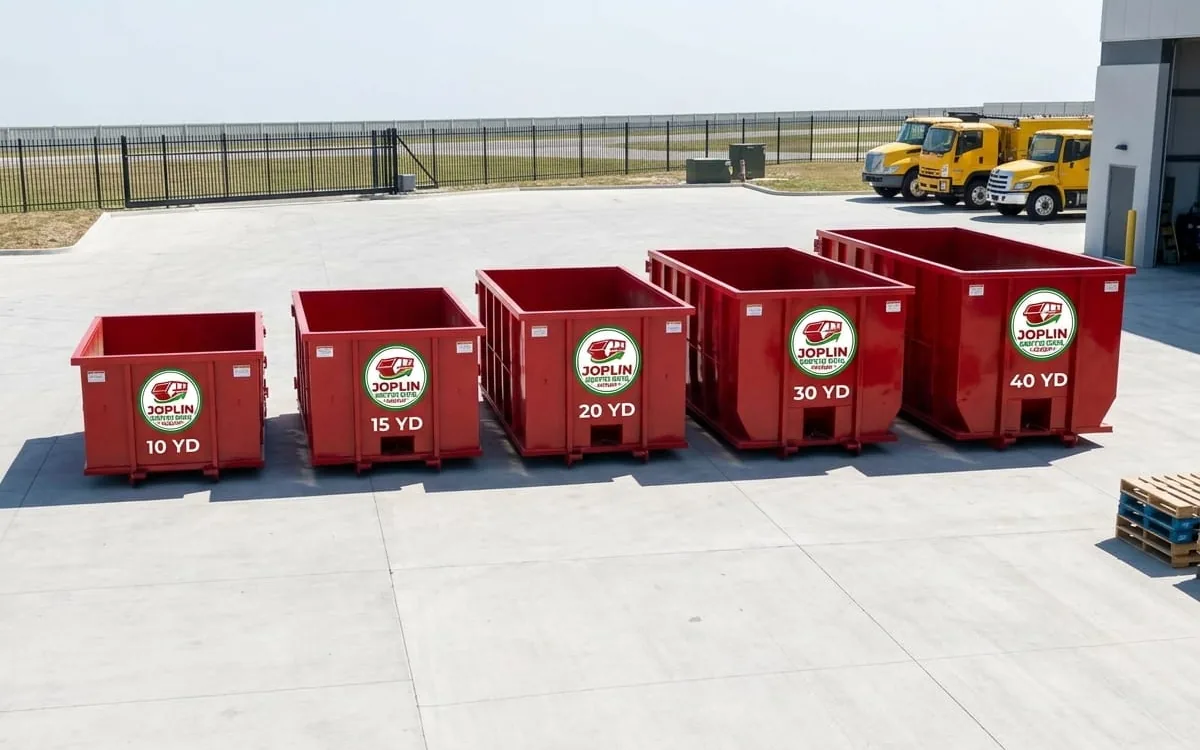
- The 15 and 20 yard: most home jobs
- The 30 yard: big and bulky
- When in doubt, ask a local
Choosing a dumpster size is the question we get asked most, and the one people most often get wrong - usually by booking a bigger box than they need, or by putting heavy material in one too large to haul. The right size comes down to two things: how much you're clearing, and how heavy it is.
Here's how the four common sizes map to real Joplin projects.
Start with the material, not the box
Before you think about cubic yards, think about weight. Every roll-off has a weight allowance, and dense material hits that limit long before the box looks full. Around Joplin, that matters more than most places: the ground is thin, rocky Ozark soil over chert and limestone, so a footing or foundation dig comes up heavy with broken rock, and concrete and masonry are heavier still.
So the first split is simple. Heavy, dense material - concrete, brick, chert, rock, dirt - goes in a small box sized for weight. Bulky, lighter material - furniture, drywall, framing, brush - goes in a larger box sized for volume. Mixing the two is how people end up over the weight limit in a big container.
Get that split right and the size almost chooses itself.
The 10 yard: heavy material only
The 10 yard is the heavy-material specialist. It's small on purpose: concrete runs to roughly two tons per cubic yard, so a 10 yard filled level with it is already at the legal road weight. Use it for a driveway or slab tear-out, footing spoil, chert and rock, or a small tile-and-plaster demolition.
It's the wrong box for a whole-house cleanout or a pile of brush - that light, bulky material fills a 10 yard on volume long before weight, and a 20 or 30 yard is cheaper per load. But for anything heavy and dense, it's the correct - and often the only legal - choice.
If your job is a mix of heavy and light, we'll often stage a 10 yard for the heavy material alongside a larger box for the rest.
The 15 and 20 yard: most home jobs
The 15 yard is the size we recommend more than any other, and the one people least expect. It fills the gap between the heavy-only 10 and the general-purpose 20: a single-room remodel, a multi-room flooring tear-out, or a garage, attic or basement clearance. For a lot of Joplin remodels, it's exactly right - and its shorter footprint suits the tighter drives of the older mining-era neighborhoods.
The 20 yard is the all-rounder and our most-booked size. It handles a whole-house declutter, a single-family roof tear-off, or a larger remodel across several rooms, and it still fits on a typical driveway. If you're weighing a 15 against a 20, it comes down to volume - one room versus the whole house.
Both come on one flat rate covering delivery, rental, pickup and a weight allowance, so there are no surprises after.
The 30 yard: big and bulky
The 30 yard is the big-project container - new construction, major renovations, full estate cleanouts and commercial strip-outs. It holds the volume of several smaller boxes, so bulky, lighter debris like framing, siding and cabinetry clears in one pass with fewer swaps.
The one rule with a 30 yard is to keep heavy material out. A full 30 yard of concrete or rock is far too heavy to haul legally, so the chert, rock and concrete always go in a dedicated 10 yard while the 30 does what it does best with bulky debris.
On a build out toward Carl Junction or Neosho, we run scheduled swaps on a 30 so the framing and finish crews never stop for a full box.
When in doubt, ask a local
The honest truth is that a two-minute phone call beats a sizing chart. Tell us what you're clearing and roughly how much, and we'll recommend a size based on both volume and weight - and flag if a heavy load needs its own box.
Most first-timers do better with that guidance than with a guess, and it saves the two costly mistakes: paying for a box you don't fill, or getting stuck with an overweight load or a second haul.
We'd rather send the right size once than the wrong size twice. Call and describe the job, and we'll get it right.
Book a container in Joplin
One flat rate covering delivery, seven days, pickup and disposal.
(417) 665-4603Questions readers ask about this
What's the most common dumpster size for a home project?
The 20 yard is our most-booked size - it handles whole-house cleanouts, single-family roof tear-offs and larger remodels. But for a single room, a 15 yard often does the job for less.
What size do I need for concrete or rock?
A 10 yard, dedicated to the heavy material. Concrete, chert and rock are so dense that a bigger box filled with them can't be hauled legally. Keep heavy debris separate from lighter waste.
Can I put heavy debris in a big dumpster?
Only in small amounts. A 30 or even a 20 yard filled with concrete or rock goes over the legal weight fast. Heavy, dense material belongs in a dedicated 10 yard sized for weight.
How do I choose between a 15 and a 20 yard?
Volume. A single room or a mid-size cleanout suits a 15 yard; a whole-house project or a bigger remodel suits a 20. Tell us what you're clearing and we'll steer you right.